On injury, identity, and staying whole as your relationship with sport evolves
By Elliott Rector
A few weeks ago I wrote about planning to stop racing at the end of the 2027 season, and about wanting closure rather than a slow fade. This week’s post comes at the same question from a different angle.
It’s written by Elliott Rector, one of my oldest friends, who is recovering from his second consecutive Achilles surgery and thinking hard about what running means when you can’t do it the way you used to. He works with people at exactly these turning points, so he’s grappling with it personally and professionally at the same time.
What happens when your relationship to running changes? Please give it a read. – Jacob
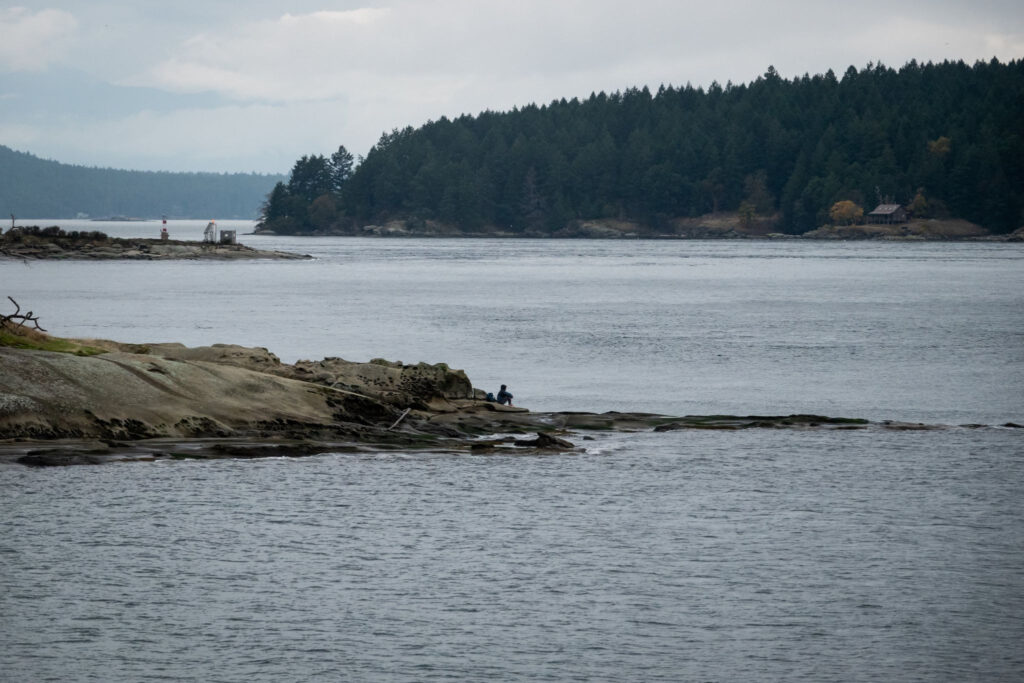
Galiano Island, British Columbia
For a lot of us, running stopped being just exercise a long time ago.
It became structure. Community. The place where effort made sense and progress could be measured. You learn who you are through discipline and repetition: early alarms, long efforts in the rain, small gains no one else sees. Over years, the sport gives you a clear answer to a question most people wrestle with their whole lives. Who am I?
And then, at some point, the answer shifts.
When the relationship changes
An injury interrupts the rhythm. Paces that used to come easily stop coming. A race season ends and nothing obvious replaces it. A child arrives, a career expands, a body ages. Nothing is broken. Growth and time are simply changing your relationship to the thing that has held you.
Most runners go through this privately. From the outside you’re still capable, still strong, still “the runner.” Inside, questions start to surface:
Am I still who I was when running shaped my days?
What happens when performance fluctuates, or stops?
How do I hold ambition alongside family, work, aging, or recovery?
What does commitment look like now?
These aren’t training questions. No block of intervals answers them. They are identity questions, and they rarely resolve quickly.
The curriculum of injury
I learned this again this year, recovering from my second consecutive Achilles surgery. Weeks of slowed movement. Progress measured in small, repeatable steps instead of milestones.
Injury teaches a different curriculum than performance. It takes away velocity. It quiets certainty. It asks for patience without offering proof that the patience will pay off.
Somewhere inside that slower rhythm, I kept arriving at the same realization: the goal isn’t only to get back to running. It’s to stay whole while your relationship to running changes.
The decisions that unfold around sport rarely stay inside sport. They shape how you parent, how you work, how you show up in your partnership, how much you trust yourself, and the story you tell about who you’re becoming.
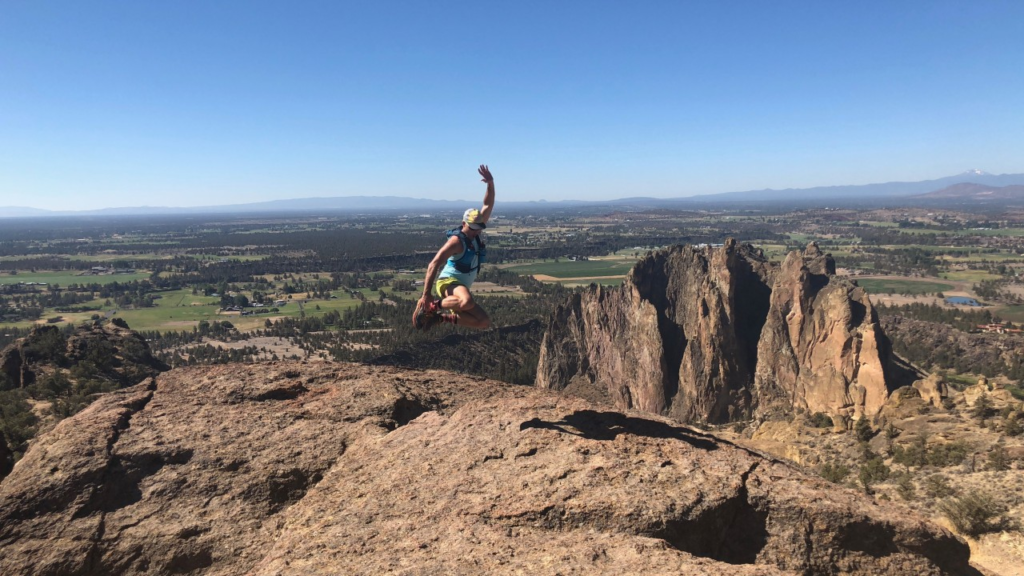
Smith Rocks, Oregon
Joy is part of the training
Last winter I watched Alysa Liu return to the Olympic ice and win gold. She had stepped away from skating entirely, then came back on her own terms. What showed up in her performance wasn’t pressure. It was lightness and freedom, the look of someone who had reclaimed her relationship with the sport.
Justin Verlander, who threw the final pitch of his 21-year career in Detroit this past weekend, offers another version of the same lesson. For most of his career he pitched angry, the snarl as much a part of his routine as his fastball. Then something shifted. He has credited his daughter with one of the best seasons of his career at 39, the year he stopped pitching out of anger and started pitching out of love. When he walked off the mound for the last time, she was the one who came out to take him out of the game.
As performance scientist Steve Magness pointed out, competitiveness isn’t a single path or a caricature we all have to imitate. The drive can come from many places. Verlander found the source that was true to him, and it carried him further than anger ever did.
I’ve been thinking about this with my own daughter. She’s six and a half, and every week she writes a note in a small journal to my wife and me, and we write her back. This week’s note was about the school fair and the four laps she ran in P.E. Here is part of what I wrote back:
I’m soooo proud of you for all you are and are becoming. You are a runner! You are at the beginning of your running journey. I am too, in a way. I am learning to run again, which, like you, takes practice. The more we practice, the more we learn. We learn about our bodies: how we move, one foot and step at a time; how long we can go; how far we can travel; and how fun it can all be. Sometimes, maybe a lot of the time, it will feel hard or you may struggle. That’s good. That’s part of how you grow. What’s important is that we keep moving, we keep trying, we show up and run with joy.
I wrote it for her, but I was writing to myself too. Coming back from my Achilles injury, I’m a beginner again, relearning one foot and one step at a time. Her running is just beginning and mine is beginning again. What I most want to hand her is the same thing I’m trying to hold onto myself: struggle is part of the path, not a sign you’ve lost it, and joy isn’t the reward for getting somewhere. It’s what keeps you going.
Joy isn’t the opposite of discipline. It’s often what lets discipline last. If the goal is to run for a lifetime, joy isn’t optional. For many athletes at a turning point, rediscovering it matters as much as rebuilding strength or confidence.
Where this work happens
My own path hasn’t been a straight line. I spent years as a litigator before leaving law to become an executive coach, breathwork facilitator, and wilderness retreat leader. I’m CPCC certified and trained as a Wilderness First Responder. My work is rooted in presence, empathy, and deep listening, and it draws on my lived experience, neuroscience, somatic practices, and time in wild places. Most of all, it draws on the way my father taught and coached me growing up: not by giving me the answers, but by helping me find my own.
Much of my work is with people at exactly these inflection points: founders and executives, and increasingly athletes across competitive levels. People coming back from injury. People stepping away from competition. People learning to hold excellence alongside other identities that now matter just as much.
I work with people and organizations both in person and remotely, so geography doesn’t have to be a barrier. In 1:1 coaching, we slow the moment down. We name what’s shifting and what remains essential, and we build a way of training and living where performance, recovery, ambition, and life stop pulling against each other.
Breathwork is often part of that. It’s one of the most direct tools I know for working with the nervous system that carries all of this: the stress of a race build, the frustration of an injury, the grief of a chapter closing.
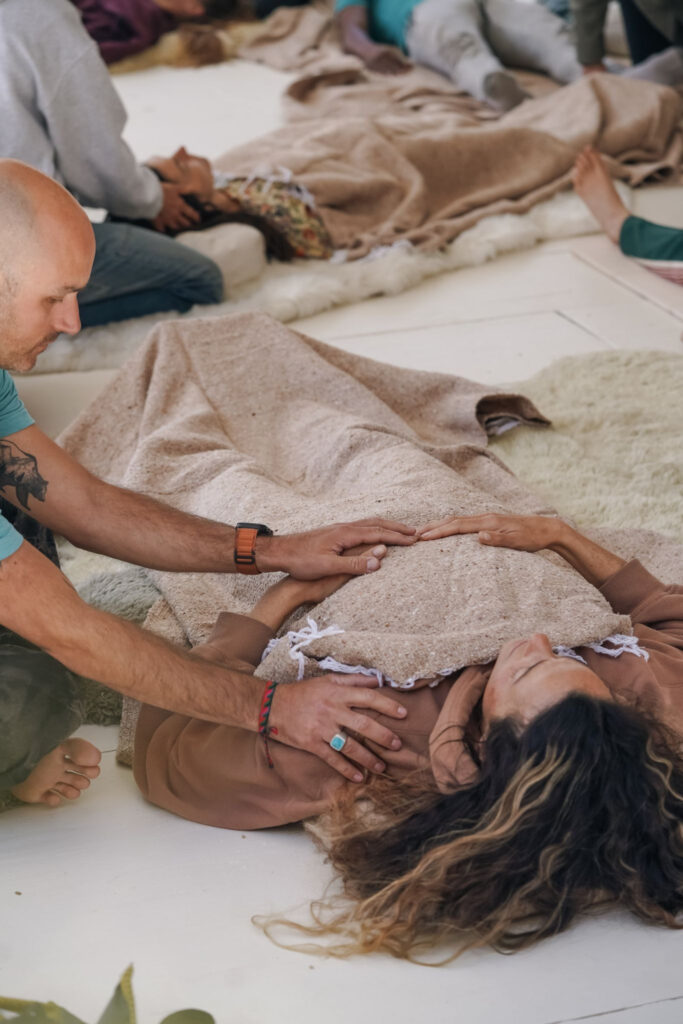
Guided Breathwork
Bodega Ridge: an invitation for men in the Pacific Northwest
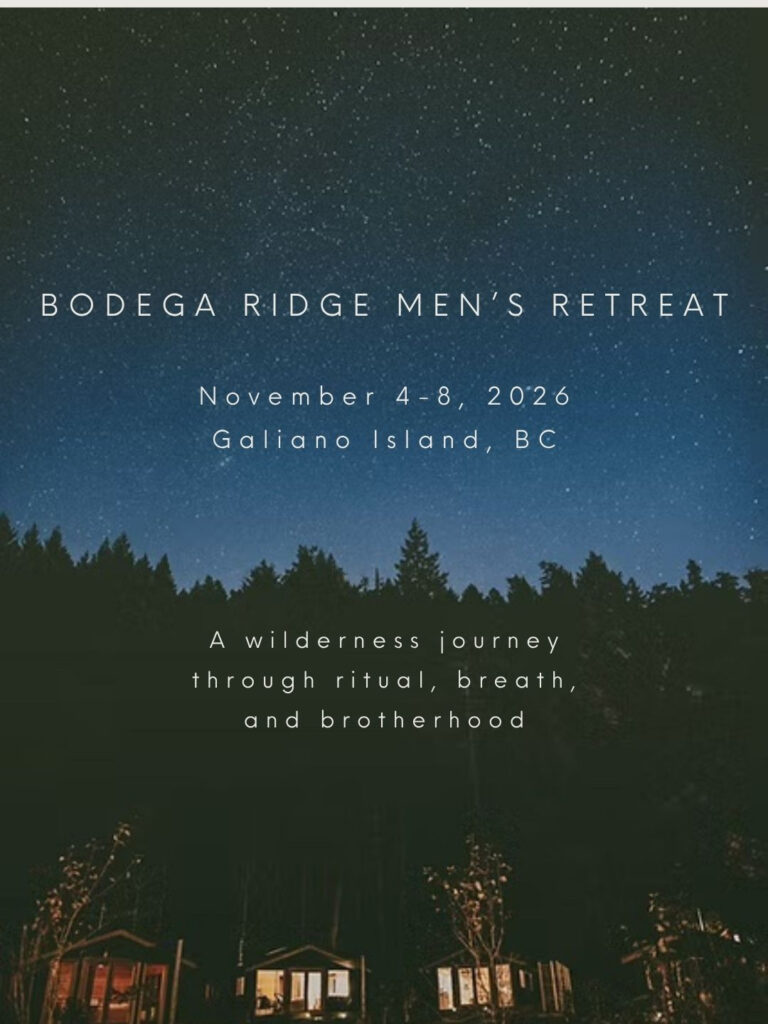
This November 4-8, I’m leading the Bodega Ridge Men’s Retreat on Galiano Island, 22 acres of coastal wilderness, a short ferry ride from Swartz Bay or Tsawwassen.
We describe it as a wilderness journey through ritual, breath, and brotherhood. The days are built around breathwork, meditation, yoga and somatic practice, and guided time on the land paired with contemplative teachings. It isn’t a weekend of sitting in a circle talking, and it isn’t a performance of toughness. It’s designed to settle the nervous system so that what matters can come into view.
This year there’s more room to move and adventure: hiking, trail running, kayaking, biking, and swimming for anyone who wants it. There are shared, chef-crafted meals, and long evenings with a small group of men who arrive as strangers and rarely leave that way.
Many of the men who come are athletes of some kind (trail runners, climbers, cyclists, lifelong competitors) carrying the same questions this piece is about. What happens when the body changes? What comes after the goal? Who am I without the thing that has defined me?
If you’re a man on Vancouver Island, in the Lower Mainland, or anywhere in the region, a retreat like this rarely gets more accessible. The group is intentionally small, and registration closes October 21. Details are at bodegaridgemensretreat.com.
What endures
Growth in sport doesn’t end when physical development plateaus. It continues in how you carry running with you across the seasons of your life. Sometimes that means rebuilding after injury. Sometimes it means rediscovering play, preparing to step away, or learning to hold your ambition next to things that now matter just as much.
Each chapter asks something different. The deeper question stays the same: how do you keep pursuing what matters without losing yourself along the way?
Wholeness isn’t the absence of ambition. It’s the condition that lets ambition last. And the most meaningful result is rarely a finish time or a comeback story. It’s the quiet moment when you recognize you’re still you. That isn’t because of what you produce. It’s because of how you’re moving through change.
The point was never to return to who you were. It’s to carry forward to who you’re becoming.
Elliott Rector is an executive coach, breathwork facilitator, and wilderness retreat leader based in Oakland, California. A former litigator, he works with leaders, organizations, and athletes at inflection points through 1:1 coaching, leadership offsites, and retreats. Learn more at elliottrector.com and bodegaridgemensretreat.com, or find him on Instagram at @elliottrector and on his Substack, Human Capacity.