I think I just about hit the benchmark I’ve been chasing — a full, normal structured training week. Two intensity days, a medium-long run, a long run, and easy days around them. The thing I’ve been working toward since this whole rehab started.
Here’s how the week looked:
Tuesday — Island Endurance workout. 1 min fast / 1 min float / 1 min easy intervals. Ran it hard, around 7.5-8/10. Felt strong.
Wednesday — 76 minutes on the PKOLS trails, about 1,300ft of climbing.
Thursday — Long road bike, just under 19 miles around the Victoria, Oak Bay, and Saanich loop. Easy spin.
Friday — Reservoir session at Summit Park. Fast/float/walk loops. Genuinely fast running — this was probably the quickest sustained work I’ve done since starting the rehab.
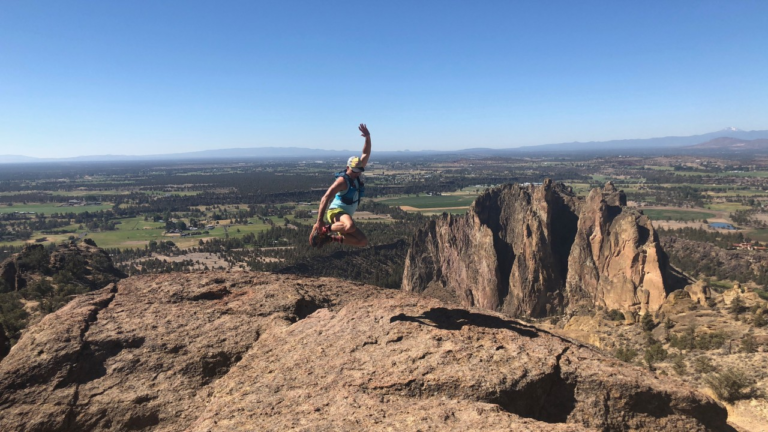
Saturday — 90 minute long run up near Parksville while camping, around the Rathtrevor and Englishman River trails. Flat, soft, forested. A good place to run.
A couple of camping nights in the middle of all that, which was its own kind of good.
That’s a complete structured week. Not a perfect one, and the long run at the end was more of a grind than I’d like, but the structure held. Eight weeks ago running 20 minutes felt strange. Now I’m stringing together a full week of real training.
Intensity Control
The other thing on my mind comes from listening to Marius Bakken — the runner behind a lot of what became the Norwegian model of training. His whole approach is built on control. Easy days genuinely easy, intensity held at a level you can repeat rather than run into the ground.
It made me realize I’m probably running my easy days too fast and my workouts too hard. For most runners that just means slower progress. For me, with everything going on in my lower legs, it might mean constant muscle tension in the calves, soleus, and tendons that never quite gets to release. So I’m going to back off — easy days slower, workouts controlled rather than all-out — and see if the legs feel fresher and the heels settle more between sessions.
Feeling Better vs. Being Better
Something else has piqued my interest and it’s worth sitting with. The research on tendon rehab consistently shows that pain and function improve well before the tendon itself actually changes. A 2022 clinical trial out of Berlin (published in Sports Medicine – Open) found that patients improved clinically across the board, but only the group doing heavy, high-load work showed real mechanical and structural adaptation in the tendon. In other words, people felt better whether or not the tissue had actually remodeled. More broadly, the literature keeps finding that structural changes in a tendon don’t correlate neatly with how a person feels.
What that tells me is there’s a window where you feel recovered before you actually are. The pain settles, the runs feel good, and the temptation is to push — but the structure underneath hasn’t caught up yet. That’s exactly when people reinjure themselves.
I think I’m in that window right now. Feeling strong, stringing together real weeks, tempted to do more. So the patience isn’t just caution for its own sake — it’s respecting that the part of me that feels recovered is running ahead of the part of me that actually is.
Morning stiffness and pain: 1-10 scale. Running in Altra Escalante (zero drop) unless noted. I’m using Claude as a daily training and rehab log — tracking morning stiffness, pain levels, sessions, and patterns in real time. These blog posts are written with Claude’s help, pulling from that ongoing log each week.
The Berlin study is Radovanović et al. 2022, “Evidence-Based High-Loading Tendon Exercise for 12 Weeks Leads to Increased Tendon Stiffness and Cross-Sectional Area in Achilles Tendinopathy,” in Sports Medicine – Open